


Training Pace Guide
Understand the purpose behind different running intensities and how pace, effort and the talk test can work together. Use this guide to help judge the right effort for each type of training session.
Choose a Training Intensity
Select an intensity below to see what it is designed to develop and how it should generally feel.
Easy / Recovery
Builds aerobic capacity while keeping overall stress relatively low. Easy running should make up a large proportion of training for most endurance runners.
Relaxed and controlled. Breathing should feel easy and you should finish feeling like you could have continued.
You should normally be able to speak in full sentences without needing to pause regularly for breath.
Easy runs, recovery runs, warm-ups, cool-downs and much of your longer endurance running.
Don't force a particular pace. Easy pace can vary considerably depending on fatigue, terrain, weather and where you are within your training week.
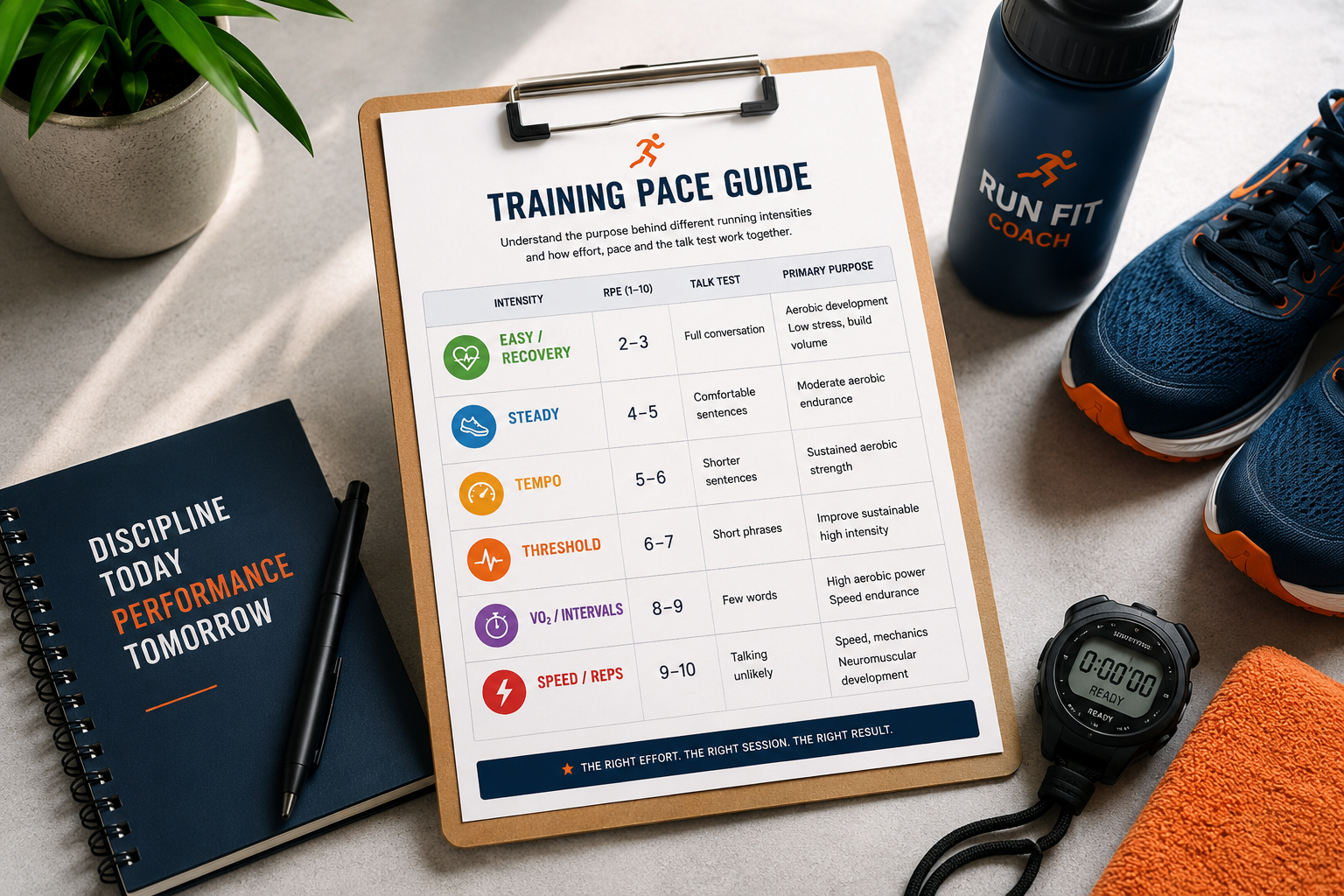
Training Intensity Quick Guide
These ranges are deliberately broad. The aim is to understand the purpose and feel of the session rather than chase an exact number.
| Intensity | RPE | Talk Test | Typical Purpose |
|---|---|---|---|
| Easy / Recovery | 2–3 | Full conversation | Aerobic development and low-stress volume |
| Steady | 4–5 | Comfortable sentences | Moderate aerobic endurance |
| Tempo | 5–6 | Shorter sentences | Sustained aerobic strength |
| Threshold | 6–7 | Short phrases | Improve sustainable high-intensity running |
| VO₂ / Intervals | 8–9 | Few words | High aerobic power and speed endurance |
| Repetition / Speed | 9–10 | Talking unlikely | Speed, mechanics and neuromuscular development |
Pace Isn't the Whole Story
Running pace is useful, but it can change from day to day. Heat, wind, hills, fatigue, surface and accumulated training load can all affect what pace corresponds with the right effort.
This is why pace often works best alongside other measures such as RPE, breathing and the talk test rather than being used in isolation.
Training Intensities Can Overlap
Running does not suddenly change from one physiological system to another because you cross an exact pace or heart rate. The boundaries between training intensities are not hard lines.
The purpose of the session matters more than trying to force every run into a perfectly defined zone.
Let the Purpose of the Session Lead
Your pace should support what the session is designed to achieve. An easy run does not become better because it was faster, and a threshold session does not need to become a race. Understanding the intended effort helps keep training more consistent, repeatable and appropriate to your current fitness.